
Mandatory hallmarking of gold would be a positive in making the gold market more organised. Mandatory hallmarking would come into effect from January 15, 2020, with a one-year transition period for trade to sell existing inventories. Experts also expect more policy measures next year to bring in more transparency in terms of gold as an asset class.
Chief Minister Nitish Kumar has already taken a lead with his knock-on-door campaign.

TCS tops the list of 100 wealth creators for the fourth time in a row

Motilal Oswal, chairman and managing director, Motilal Oswal Financial Services, tells Puneet Wadhwa that with Moody's upgrading India's sovereign rating and earnings growth coming back, the country will remain a hot destination for foreign investors.

Benchmark indices gain 30% this year, buoyed by global liquidity, new government

market rally, especially in mid-caps, has also been driven by a pick-up in the monsoon and the government's resolve to get the goods and services tax (GST) Bill cleared in the recent session of Parliament.

The fall in metal and mining stocks comes on the back of weak Chinese trade data

Ajit Mishra, vice president, Research, Religare Broking, answers your queries.

On the lines of Shariah-compliant products, intermediaries ask exchanges to consider investment benchmark.

Finance Minister Nirmala Sitharaman on Tuesday unveiled a Rs 39.45 lakh crore Budget with a view to fire up the key engines of the economy to sustain a world-beating recovery from the pandemic. This was Sitharaman's fourth Budget. While the taxpayers were left in the lurch, once again, was she able to cheer Corporate India?

US Fed rate rise raises risk of further drying up of FII flows.

Small stocks made a dashing comeback in 2020 after delivering negative returns in the last two years as increased retail investor participation in pandemic times saw small-cap index surging up to 31 per cent and outperforming the bigger benchmark gauge. This year turned out to be eventful for the equity market, witnessing bearish and bullish sentiments at different points of time. While the initial part of COVID-ravaged 2020 saw the bears in full force amid concerns related to the pandemic and lockdowns hurting economic activities, bulls made a comeback towards the latter half of the year. As the market swayed with many lows as well as highs, small and mid-cap indices emerged as markets favourites in 2020.

'The news about the new virus strain in the UK provided them with an opportunity to take money off the table.'

Analysts say traders have been building long positions on expectations the BJP would sail through in the five Assembly elections
Hawkish guidance by the US Fed raises concerns it could tie the hands of RBI from trimming rates.

'The good news is that money continues to flow into India-focussed offshore funds.'

Avoid fresh investments, as there might be more opportunities in the coming months, market experts tell Joydeep Ghosh

'It is almost four years since we've seen strong growth in earnings.' 'The markets have rallied about 20 per cent in the past year, which is ahead of earnings.' 'So, the stress now will be on earnings to catch up.'

Participants are keenly awaiting the rollovers to the next series ahead of the expiry of June F&O.

The acquisition of the debt-laden Binani has catapulted Birla-owned UltraTech to the top spot in India, leaving it free to turn attention to overseas market

Samvat 2070 was a great year for top Indian conglomerates in the stock markets.

But much depends on govt action & global economy; Sensex gains in 2070 the biggest in five years
Election results, diesel & gas pricing moves, labour law changes - all stoke anticipation of more cheer ahead.

Market breadth is positive with 942 advances and 196 declines.

Brokers have only kept guarantees for which they have open positions.

Only six sectors are likely to report good set of numbers in Q4 FY15.
Despite returns from gold down over 5% in the past three months, it is a good idea to keep this asset class in your portfolio.

Given the developments, analysts do not foresee a quick recovery.

The bigger worry is that the miss for FY19 is likely to be significant even after assuming macro factors such as crude oil prices, rupee, input costs, and interest rates, do not worsen from the current levels, reports Vishal Chhabria.

'India is still a cash economy.' 'For a common household, almost everything from grocery to maid services is paid in cash.' 'The demonetised notes account for 85 per cent of the currency in circulation.' 'Until fresh notes flow back into the economy, day-to-day transactions ordinarily done in cash will be impacted.'

Investment in market leaders with a safety-first approach could yield reasonable returns across sectors.
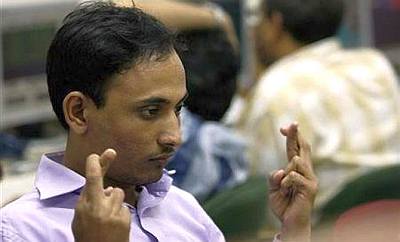
Sharp swings likely in equity, forex and bond markets.

It won't be an easy ride for the markets, reckon experts, considering the multiple state elections in 2018 and general elections next year.

'Experts are not ruling out further pain as global factors cannot insulate India from the aftermath.'


Eight Sensex biggies such as Reliance, L&T, BHEL, SBI and ICICI Bank are among the worst hit.

Growth concerns on China, which has already seen the yuan getting devalued twice in August, have rattled global financial markets, including that of India.

It is advisable to stick to mid-caps with sustainable financial metrics rather than those offering the promise of faster growth.


Secondary market might be a better bet for investors
